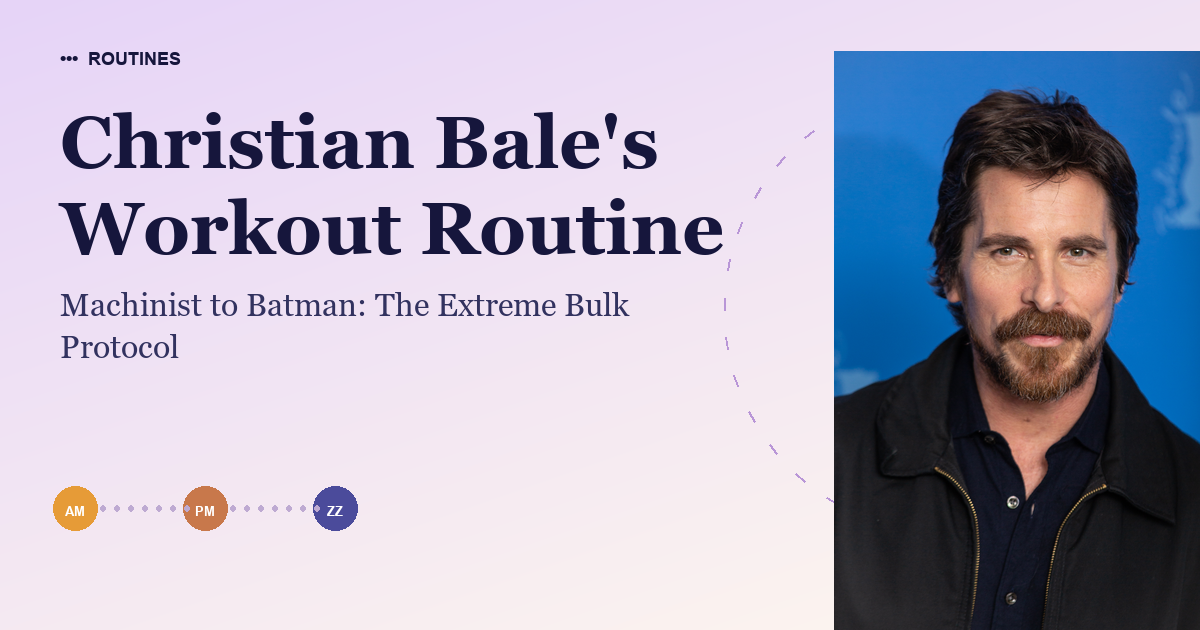
Christian Bale's Batman Begins transformation is the most extreme body composition change in mainstream Hollywood history. Coming off The Machinist, in which he weighs 121 pounds at 6 feet tall, he has approximately six months to reach the physically imposing physique Christopher Nolan needs for the Dark Knight.
The initial bulk-up phase is deliberately aggressive: heavy lifting almost every day, minimal cardio, and a dietary approach that prioritizes caloric surplus above all other considerations. A secondary cutting phase then reduces him from his overshoot back to the lean, muscular condition visible in the finished film.
This article covers the lifting protocol Bale uses across both phases, the vegetarian dietary approach that makes his protein targets uniquely challenging, and the philosophy behind one of cinema's most discussed physical transformations.
The Extreme Starting Point
"I had to get back in shape. Not just look it, but genuinely be capable of what Batman needs to do." - Christian Bale
The Machinist's 121-pound figure is not a training story but a medical one. Bale has been open about the fact that the diet for that role is dangerous in its restriction and leaves him physically and cognitively depleted by the end of production.
The Batman Begins preparation begins from that depleted baseline. Bale reportedly aims for an initial target of 190 pounds but surpasses it, arriving at his first screen test with Nolan at a size the director considers too large. This necessitates a secondary cutting phase before filming begins.
Phase One: The Dirty Bulk
"I had to get back in shape." - Christian Bale
The initial bulk-up phase has no structured program. Bale lifts heavy on compound movements almost every day, skips cardio entirely, and eats every three hours regardless of food quality. Pizza, ice cream, and five consecutive meals are documented elements of the approach.
The physiological basis for this approach is muscle memory. A previously depleted body rebuilds muscle tissue faster than a normal baseline allows because the muscles retain the neural pathways and cellular machinery from prior development even when the mass itself has been lost. This allows Bale to accumulate mass at a rate that would not have been possible for someone who had never been in shape before.
20 MINUTES A 20 minute session in a suit that shocks you = 3 hours at the gym? The research, the suits, the studios and what it actually costs. Everything we know about EMS, in one place. SEE THE EVIDENCE →Phase Two: Structured Lifting Split
"I had to get back in shape. Not just look it, but genuinely be capable of what Batman needs to do." - Christian Bale
Once initial mass accumulation reaches its target, Bale transitions to a structured daily split that works a different muscle group each session. The standard scheme uses three sets of 10 to 8 reps, with the last set intentionally taken to a lower rep count under near-failure conditions. Drop sets and supersets extend the training stimulus beyond what straight sets alone produce.
| Day | Focus | Key Movements |
|---|---|---|
| Monday | Chest | Bench press, incline press, cable fly |
| Tuesday | Back | Deadlift, pull-ups, bent-over row |
| Wednesday | Shoulders | Military press, lateral raise, rear delt work |
| Thursday | Arms | Barbell curl, skull crusher, dips |
| Friday | Legs | Squat, leg press, Romanian deadlift |
| Saturday | Full body or repeat priority muscle | Compound movements |
| Sunday | Rest | Full rest |
The Core Compound Movements
"I had to get back in shape. Not just look it, but genuinely be capable of what Batman needs to do." - Christian Bale
Bale's lifting across both phases is built primarily around squats, deadlifts, and bench press. These three lifts develop the most total muscle mass in the least time because they recruit multiple large muscle groups simultaneously. For a transformation that needs to happen in months rather than years, compound movement dominance is the correct priority.
- Bench press: 3 sets x 10-8 reps (last set to near-failure)
- Incline dumbbell press: 3 sets x 10 reps
- Deadlift: 3 sets x 8 reps
- Pull-ups: 3 sets x 10 reps
- Bent-over row: 3 sets x 10 reps
- Back squat: 3 sets x 10-8 reps (last set to near-failure)
- Military press: 3 sets x 10 reps
- Barbell curl: 3 sets x 12 reps
- Skull crusher: 3 sets x 10 reps
- Drop sets and supersets used on final set of each exercise
Phase Three: The Cutting Phase
"I had to get back in shape." - Christian Bale
The cutting phase that precedes filming replaces unrestricted eating with smaller meals every two to three hours, each balanced across lean proteins, carbohydrates, and healthy fats in a 1:2:3 ratio of fat to protein to carbohydrate by energy contribution. Cardio is added through running as the primary tool for creating the caloric deficit that reduces body fat.
The 20-pound reduction Nolan requests requires both increased running volume and carbohydrate reduction to achieve in the compressed timeline before filming begins. Bale describes this phase as physically and cognitively demanding, though significantly less extreme than the Machinist preparation that preceded everything.
The Vegetarian Protein Challenge
"I had to get back in shape. Not just look it." - Christian Bale
Bale's vegetarian diet creates a significant constraint on the protein sources available for the Batman Begins transformation. Where most actors in comparable preparations rely on chicken, beef, and fish, Bale builds his intake around eggs, cottage cheese, and protein shakes.
Eggs provide complete protein with all essential amino acids and are consumed in large quantities throughout the preparation. Cottage cheese, with its high casein content, serves as a slow-digesting protein source particularly useful for the meals immediately before sleep.
- Eggs: primary protein source, consumed throughout the day
- Cottage cheese: slow-digesting casein protein, used before sleep
- Protein shakes: whey and plant protein to meet daily targets
- Complex carbohydrates: oatmeal, brown rice, sweet potato
- Healthy fats: olive oil, avocado, nuts
The Weight Fluctuation Career Pattern
"I had to get back in shape. Not just look it, but genuinely be capable of what Batman needs to do." - Christian Bale
Batman Begins sits between The Machinist (121 lbs) and subsequent Bale transformations that continue to demonstrate his willingness to use his body as a tool for his craft. The Machinist to Batman cycle represents the most extreme version of a pattern Bale repeats multiple times.
Each iteration demonstrates both the physiological capacity for rapid physical change and the psychological cost it extracts. He is one of few actors whose body of work can be read as a physical performance history as much as a dramatic one.
Explore Similar Routines
- Henry Cavill's Workout Routine. Cavill's Man of Steel transformation shares the rapid mass accumulation goal and compound-movement-dominant program structure, achieved from a more conventional starting point and with a more structured initial program.
- Hugh Jackman's Workout Routine. Jackman's Wolverine preparations repeatedly build and maintain a superhero physique across multiple productions using progressive overload and precise nutrition, a more measured approach than Bale's bulk-and-cut model.
- Zac Efron's Workout Routine. Efron's contrasting transformations for Baywatch and The Iron Claw parallel Bale's ability to build radically different physiques for different roles through targeted preparation programs.
- Arnold Schwarzenegger's Workout Routine. The original Hollywood physique program shares Bale's emphasis on compound movements and progressive overload, showing how the fundamental lifting principles that drove Golden Era bodybuilding remain the most effective tools for rapid physical transformation.
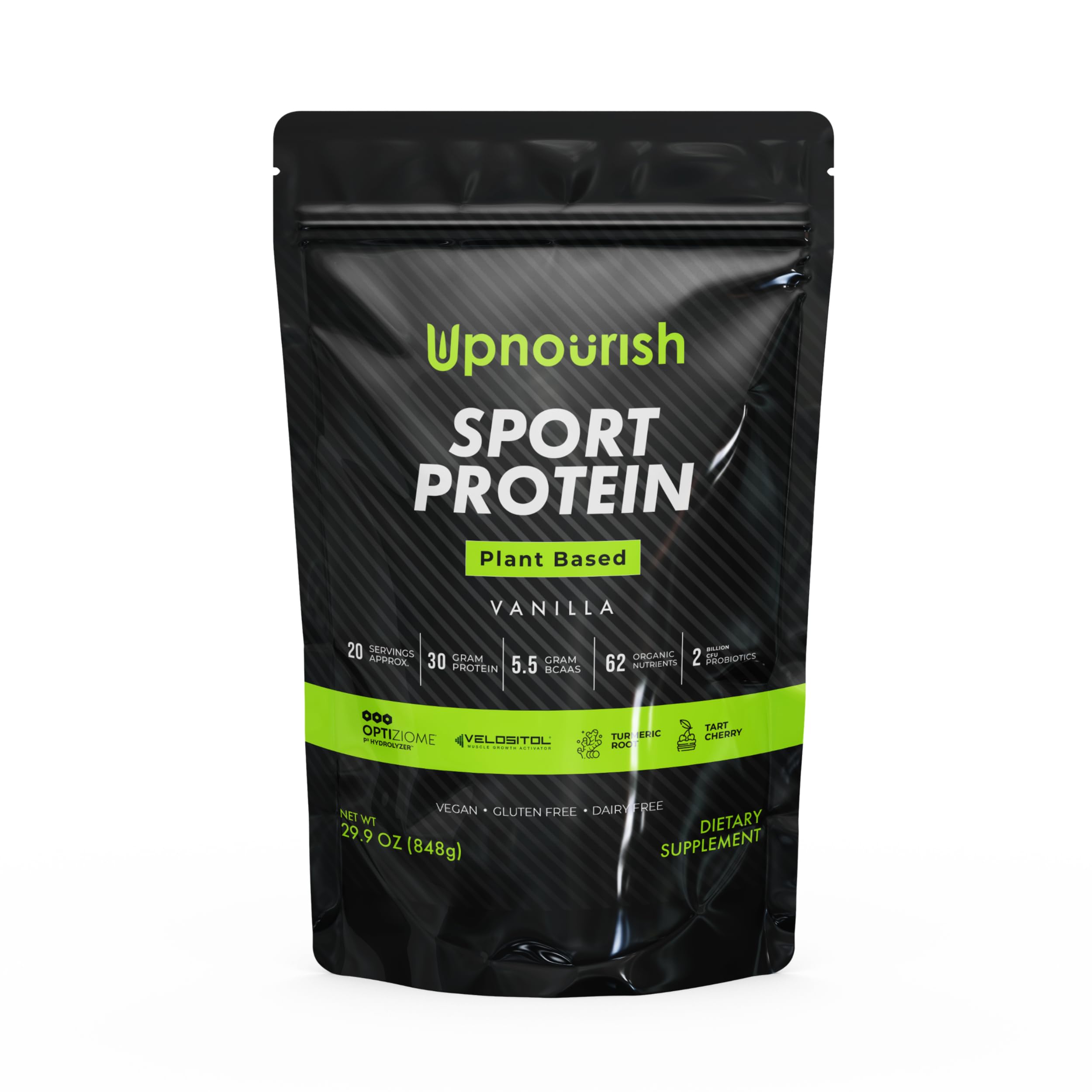


Bale's vegetarian diet makes protein the central constraint of the build. With chicken, beef and fish off the table, he leans on eggs and cottage cheese as whole-food anchors and fills the daily gap with protein shakes, whey and plant protein to hit targets, plus slow-digesting casein before sleep.