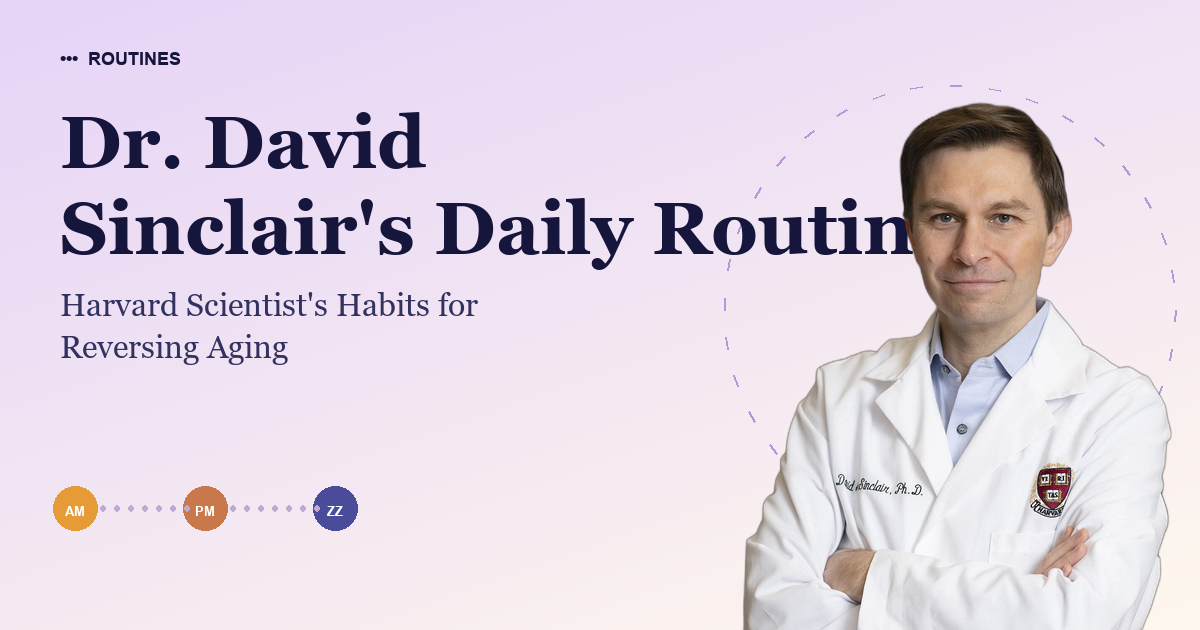
Dr. David Sinclair is a Harvard geneticist, the co-director of the Paul F. Glenn Center for Biology of Aging Research, and the author of "Lifespan: Why We Age and Why We Don't Have To." His David Sinclair daily routine is one of the most discussed longevity protocols in science, combining cutting-edge supplements, intermittent fasting, cold exposure, and specific lifestyle habits designed to activate the body's longevity pathways.
Related: our guide to the best NMN and resveratrol supplements →
This article covers Sinclair's full protocol: his fasting schedule, morning supplements, exercise approach, cold and heat exposure practices, and sleep habits. All details are drawn from his published work, appearances on podcasts including The Joe Rogan Experience, his own Lifespan podcast, and interviews with major publications.
Sinclair takes his own science seriously enough to take it himself. He participates in many of the experiments he studies and publishes his biological age data publicly, showing results consistently younger than his chronological age.
Morning Routine: Fasting First
Sinclair skips breakfast deliberately. He practices intermittent fasting, typically eating his first meal in the early afternoon, giving him a fasting window of 16 or more hours overnight and into the morning.
"I skip breakfast. I know that's hard for a lot of people. But being a little bit hungry is a good thing. Hunger turns on the longevity genes."
Sinclair believes that mild caloric stress, including hunger, activates the sirtuin and AMPK pathways that drive cellular repair. Constant feeding signals to the body that resources are abundant, which suppresses these maintenance programs.
Coffee in the Morning
Sinclair does drink coffee in the morning while fasting. Black coffee does not meaningfully break a fast and has its own polyphenol content that may support the same pathways he is trying to activate.
He consumes coffee without milk or sugar to keep insulin levels low and preserve the fasting state. This is a common modification among fasting adherents who want to maintain the metabolic benefits.
Morning Supplements
Despite skipping breakfast, Sinclair takes a targeted group of supplements in the morning. He specifically takes resveratrol with a small amount of yogurt or olive oil, as resveratrol is fat-soluble and requires dietary fat for absorption.
"I take NMN, resveratrol, and metformin every morning. I've been doing this for years. My biological age markers have continued to improve."
His morning stack centers on NMN and resveratrol, taken together because he believes the combination works synergistically through the sirtuin pathway. NMN raises NAD+ levels; resveratrol activates sirtuins that use NAD+ as fuel.
Metformin Use
Sinclair takes metformin in the morning as an off-label longevity intervention. Metformin activates AMPK, an enzyme that responds to low energy states and triggers cellular maintenance programs similar to fasting.
He does not take metformin on workout days, citing research suggesting it may blunt the adaptive response to exercise if taken around training sessions. This is a nuanced protocol that requires physician supervision.
20 MINUTES A 20 minute session in a suit that shocks you = 3 hours at the gym? The research, the suits, the studios and what it actually costs. Everything we know about EMS, in one place. SEE THE EVIDENCE →Exercise Routine
Sinclair prioritizes vigorous exercise several times per week. He views exercise as one of the most powerful activators of longevity pathways, comparable in impact to caloric restriction.
"Exercise is the most powerful drug we have. It activates every longevity pathway we know of. If you could put the benefits of exercise in a pill, it would be the best-selling drug of all time."
He focuses on cardio and resistance training, aiming to get his heart rate up high enough to breathe hard. High-intensity effort signals mild metabolic stress, which activates the same repair mechanisms as fasting.
Weekly Workout Schedule
| Day | Focus |
|---|---|
| Monday | Cardio / running or cycling |
| Tuesday | Resistance training |
| Wednesday | Rest or light walking |
| Thursday | Cardio with high-intensity intervals |
| Friday | Resistance training |
| Saturday | Outdoor activity |
| Sunday | Rest |
Why He Skips Metformin on Workout Days
Metformin inhibits mitochondrial complex I and may reduce the exercise-induced stress signal that drives adaptation. Sinclair cites studies suggesting that taking metformin around training sessions could reduce gains in VO2 max and muscle mass.
By skipping metformin on training days, he attempts to get the longevity benefits of both the drug and the exercise without interference. This requires careful scheduling.
Cold Exposure
Sinclair incorporates cold exposure through cold showers and occasional cold plunges. Cold stress activates the same stress-response pathways as fasting and exercise, triggering mild hormetic adaptation.
"I take cold showers. It's uncomfortable but it's good. Discomfort is a signal to the body that you need to adapt, and adaptation is what keeps you young."
Cold exposure activates norepinephrine release, drives brown fat activation, and triggers the expression of heat shock proteins that protect cellular structures. Sinclair treats cold as another dose of hormetic stress alongside fasting and exercise.
First Meal: Late Lunch
Sinclair breaks his fast in the early afternoon with a meal that is typically plant-forward and relatively light. He is not strict about a specific diet but generally avoids foods that spike glucose sharply or promote chronic mTOR activation.
"I eat a lot of plants. I try to eat less meat than I used to. The data on plant-forward diets for longevity is compelling, even if the mechanism isn't fully understood."
He avoids excess sugar and refined carbohydrates, which he views as accelerants of aging through glycation and metabolic dysregulation. His meals are relatively small by standard caloric targets, consistent with a mild caloric restriction approach.
Senolytics: Quercetin and Fisetin
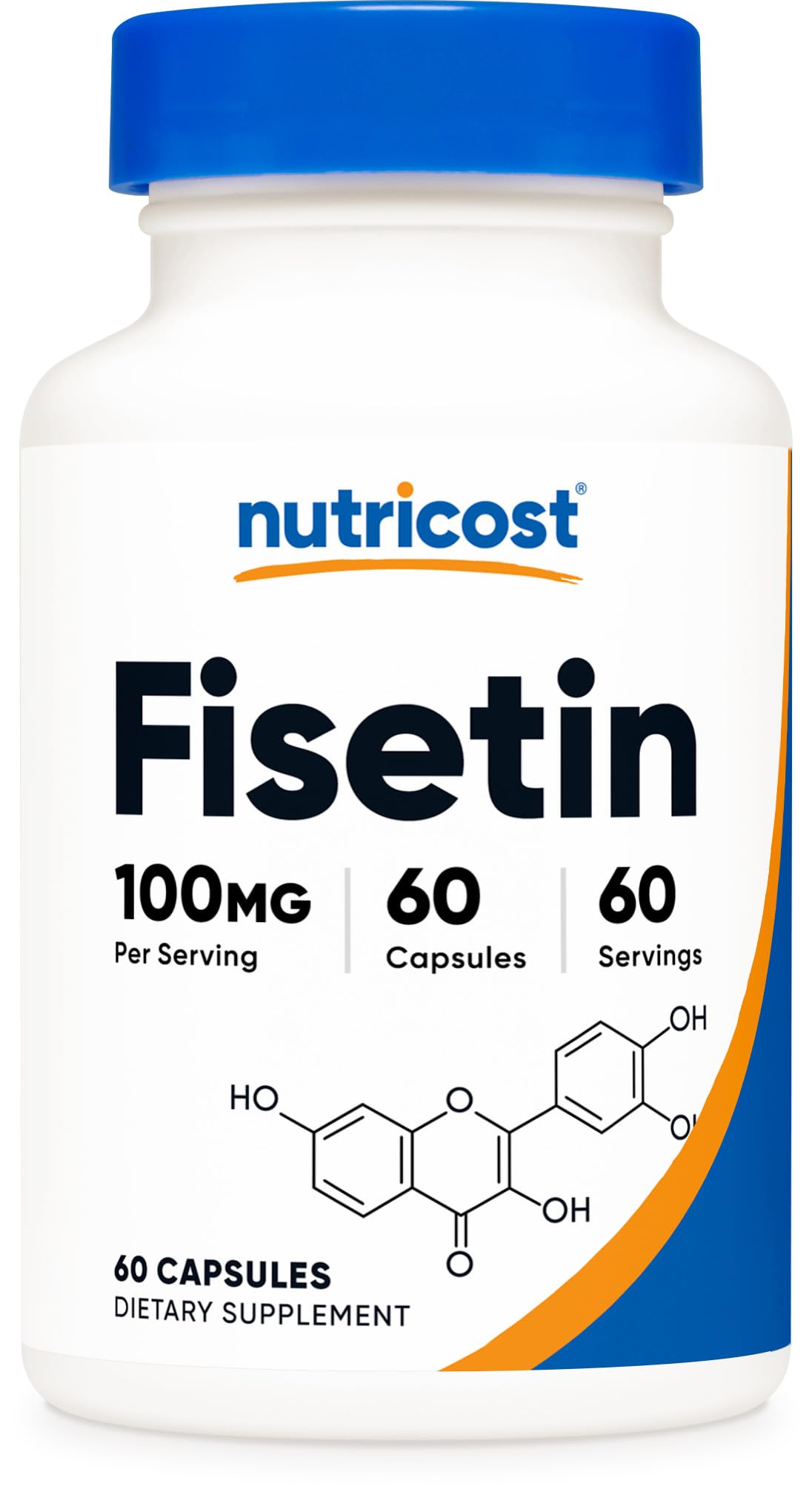
Sinclair takes quercetin and fisetin as senolytics, compounds that selectively induce apoptosis in senescent cells. Senescent cells accumulate with aging, releasing inflammatory molecules that damage surrounding tissue.
"Senescent cells are like the walking dead in your body. They hang around and cause inflammation. Clearing them out periodically may be one of the most powerful things you can do."
He takes these compounds periodically rather than daily, sometimes using a higher pulsed dose approach. The research on senolytics in humans is still developing, but animal data shows significant lifespan and healthspan improvements.
Evening Routine and Sleep
Sinclair keeps his evenings relatively simple. He aims to wind down before 10:00 PM and targets seven to eight hours of sleep, recognizing that inadequate sleep accelerates every marker of aging he studies.
"Poor sleep ages you. That's not metaphor. Your epigenetic age literally increases faster when you're chronically sleep deprived. It's one of the most damage-inducing things you can do to your body."
He keeps his bedroom cool and dark, consistent with standard sleep hygiene recommendations. Temperature and light are the two most powerful environmental inputs for sleep quality.
Alpha Lipoic Acid
Sinclair has included alpha lipoic acid in his supplement stack for its antioxidant and metabolic support properties. It regenerates other antioxidants including vitamin C and E and crosses the blood-brain barrier.
He has become more cautious about high-dose alpha lipoic acid over time, citing animal research suggesting potential lifespan shortening at very high doses. He uses moderate amounts when he does include it.
The System
David Sinclair's philosophy is grounded in the information theory of aging, the idea that aging is caused by the progressive loss of epigenetic information rather than the accumulation of DNA mutations. His protocol is designed to preserve and restore that information through multiple complementary signals: fasting, exercise, temperature stress, and targeted supplements.
What distinguishes Sinclair is that he is not just recommending what research suggests. He is conducting the research and experimenting on himself simultaneously. His openness about his own data makes his protocol uniquely credible and also uniquely controversial among more conservative scientists.
The core of his approach is accessible: eat less often, move more intensely, stress the body mildly, and support the molecular pathways that drive cellular repair.
Explore Similar Routines


Beyond the NMN-and-resveratrol core, Sinclair layers in prescription and supportive agents, metformin on non-workout days as a caloric-restriction mimetic, vitamin D3 with K2, a moderate dose of alpha lipoic acid, low-dose aspirin, and a daily statin for cardiovascular management.